Biography
Henrietta Berk
1919 – 1990
One of the most distinctive and independent painters to emerge from the San Francisco Bay Area after the Second World War.
Born in Wichita, Kansas, on January 9, 1919, Berk spent part of her childhood at the Pacific Hebrew Orphan Asylum in San Francisco. In the late 1950s she studied at the California College of Arts and Crafts in Oakland with Richard Diebenkorn and Harry Krell, absorbing the climate of the Bay Area Figurative movement without imitating any single teacher.
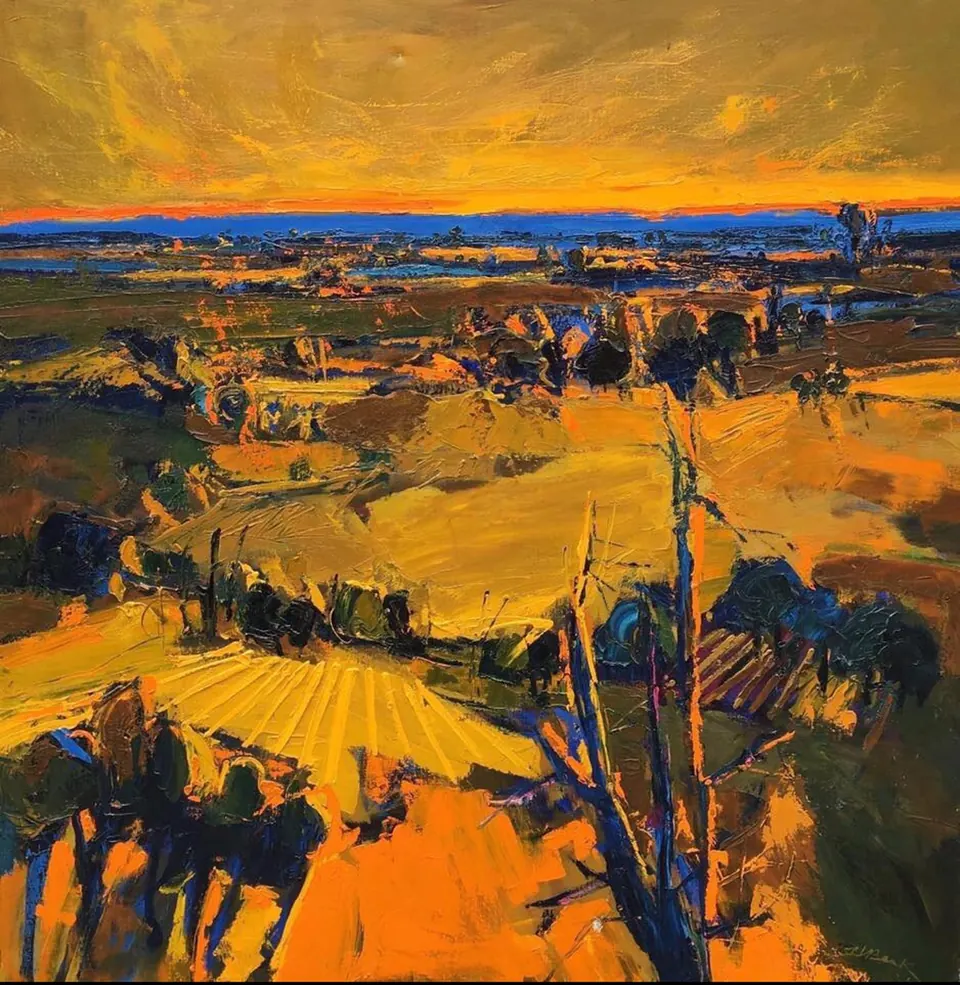
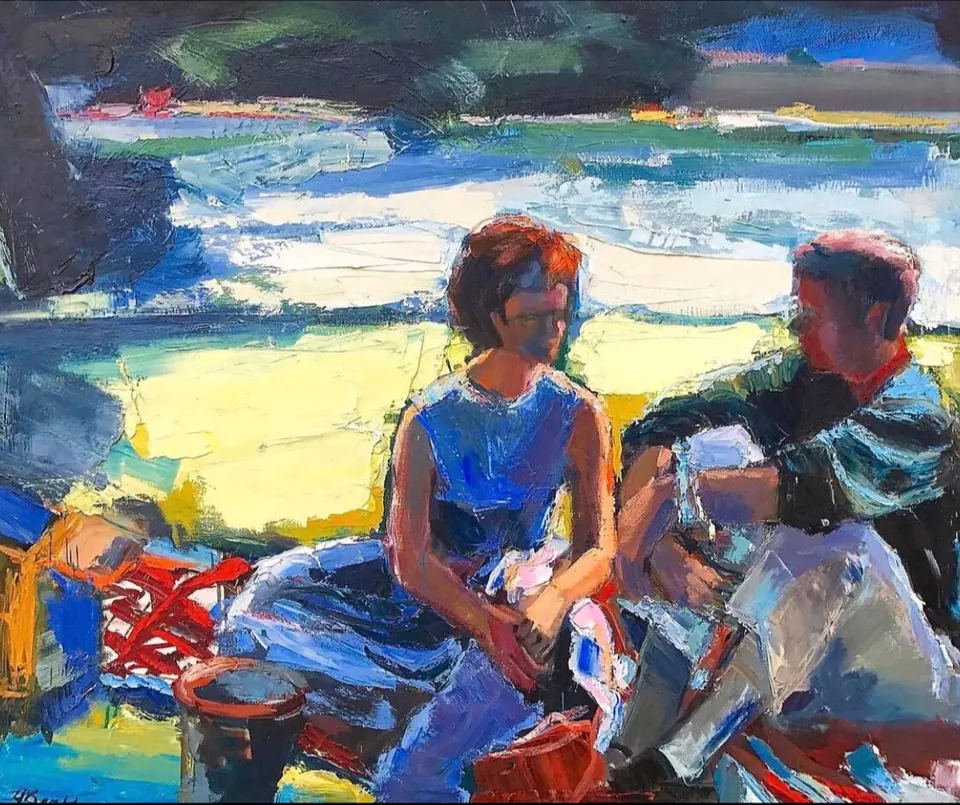
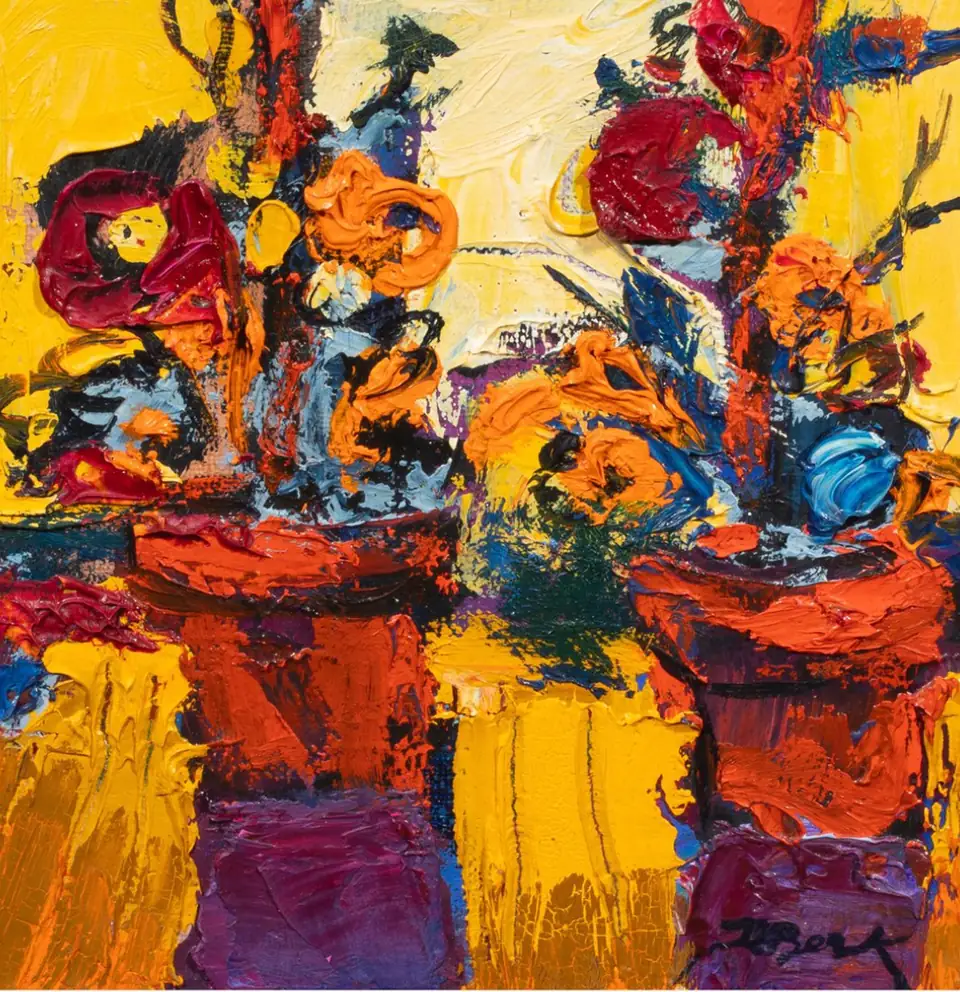
Color is the foundation of her art — vermilion, orange, turquoise and violet laid down in thick impasto with brush and palette knife. Hills became curving bands, trees calligraphic marks, bouquets explosions of pigment.
Read more
Her rise was rapid: the Oakland Art Museum’s Painted Flower exhibition and a one-woman show at the Lucien Labaudt Gallery were followed by appearances at the Oakland Art Museum (1960–66), the San Francisco Museum of Art (1962, 1963), the de Young (1962), Mills College (1965), the Carter Gallery, Los Angeles (1966) and the de Saisset, Santa Clara (1971). A Berk painting appears in the 1967 film Guess Who’s Coming to Dinner.
Acutely aware of the prejudices facing women artists, she often signed “H. Berk.” Diabetes later severely affected her eyesight; she adapted by working on larger canvases with broad shapes and strong color. She died in Oakland on January 15, 1990.
Her reputation was revived through the efforts of Steven Stern, culminating in Henrietta Berk: In Living Color at the Hilbert Museum of California Art, Chapman University (2021–22), curated by Gordon McClelland, with the accompanying book In Living Color: The Art and Life of Henrietta Berk.
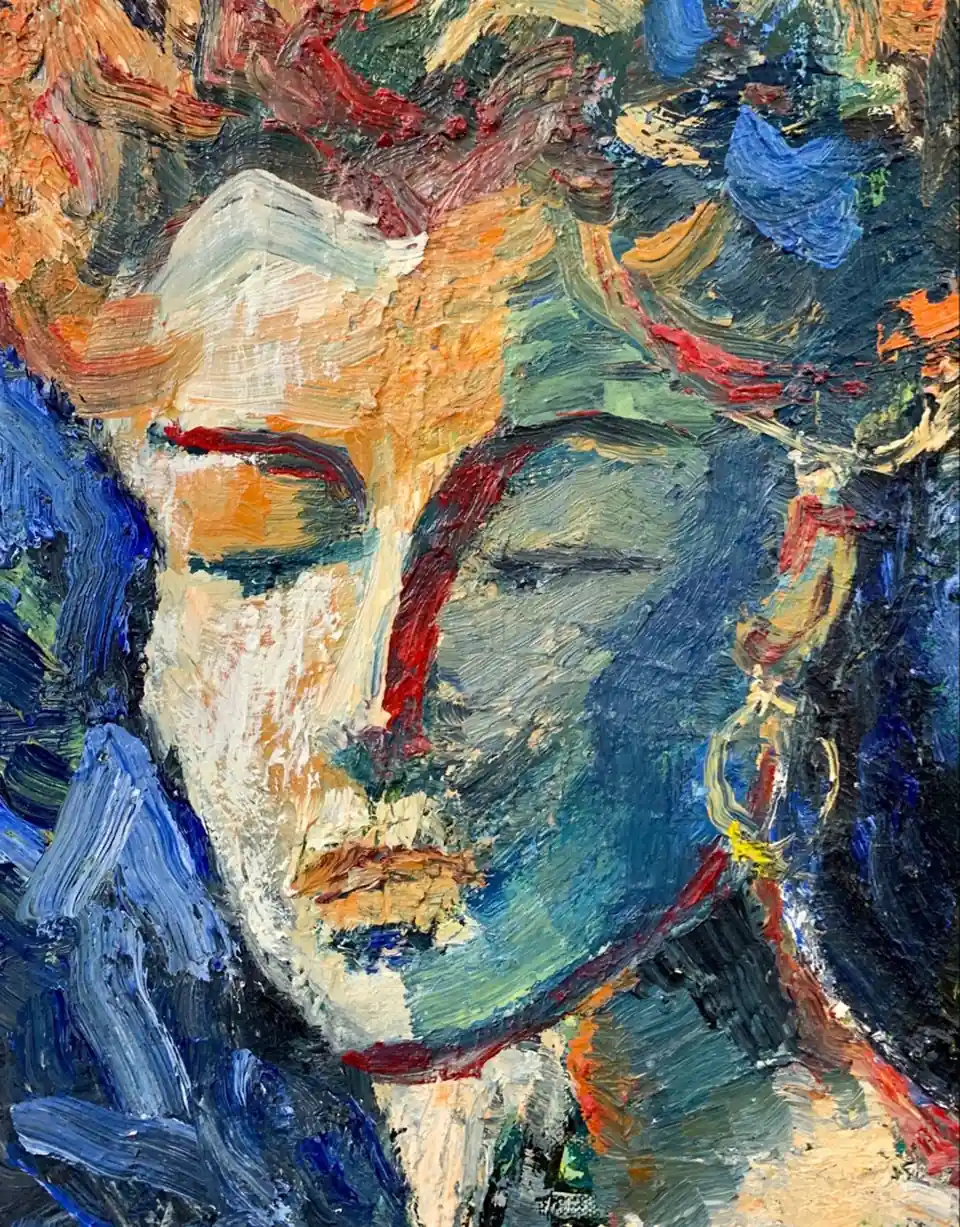
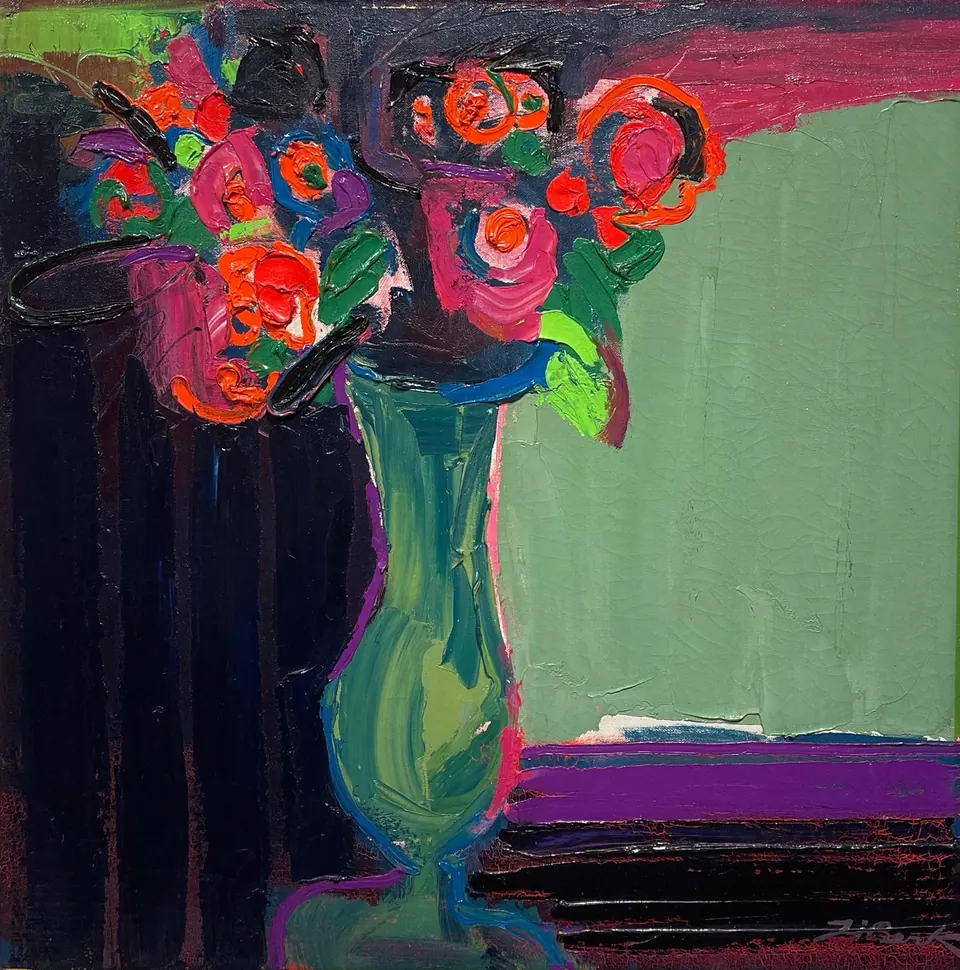 Portrait, 1960–63 · Floral in Vase